
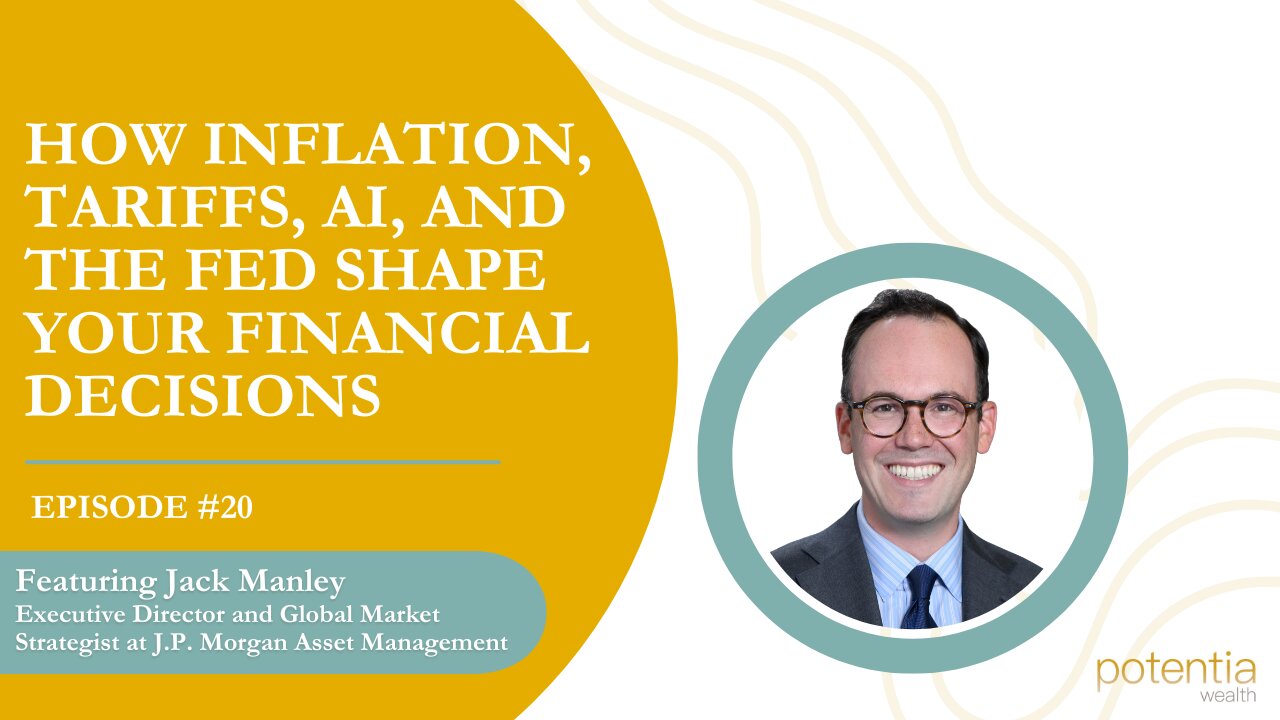
If you’re wondering why inflation reports say prices are improving while your own expenses still feel higher, this conversation breaks down why those numbers can look different.
How should investors interpret economic headlines when the numbers they hear do not always match what they experience?
In this episode, Kevin Swanson welcomes Jack Manley, Executive Director and Global Market Strategist at J.P. Morgan Asset Management, to explore the forces shaping financial markets and investor decisions. They discuss the Federal Reserve’s approach to inflation and employment, why personal inflation can feel different from official measurements, how tariffs affect consumers and businesses, the economic impact of artificial intelligence investment, and why political events may create short-term volatility while having limited impact on long-term market performance.
Key points:
- How the Federal Reserve evaluates inflation, employment data, and interest rate decisions when shaping monetary policy
- Why your personal experience with rising costs may differ from national inflation measurements reported in the news
- How tariffs can affect consumers, businesses, federal revenue, and domestic manufacturing decisions over time
- Why artificial intelligence investment is driving economic activity while productivity benefits are still developing
- How elections and political uncertainty may create market volatility without determining long-term investment results
- And more!
Connect with Potentia Wealth:
- Potentia Wealth
- 408.288.7886
- ask@potentiawealth.com
- LinkedIn: Potentia Wealth
- LinkedIn: Kevin Swanson
Connect with Jack Manley:
About our guest:
Jack Manley, Executive Director, is a Global Market Strategist at J.P. Morgan Asset Management. Jack is responsible for delivering timely market and economic commentary to institutional and retail clients across the United States and Canada. In addition, he is a contributor to the J.P. Morgan Long-Term Capital Market Assumptions and has authored numerous papers on global economies and capital markets.
Jack is also a frequent guest on BNN, Bloomberg, CNBC, and Fox Business, and is often quoted in the financial press. He graduated from the University of Chicago with a Bachelor’s degree in History.